When a Nor’easter slams into Boston, the first thing people notice is the mess—fallen trees, flooded yards, and fences leaning where they shouldn’t. But after the cleanup, another issue starts to appear: property lines that suddenly don’t look right. That’s where an ALTA title survey becomes essential.
This detailed survey helps homeowners and businesses confirm where their true property limits lie, especially after a major storm. It’s not just about lines on paper—it’s about protecting your ownership, easing insurance claims, and avoiding neighbor disputes when the ground itself seems to have shifted.
When Storms Move More Than Just Trees
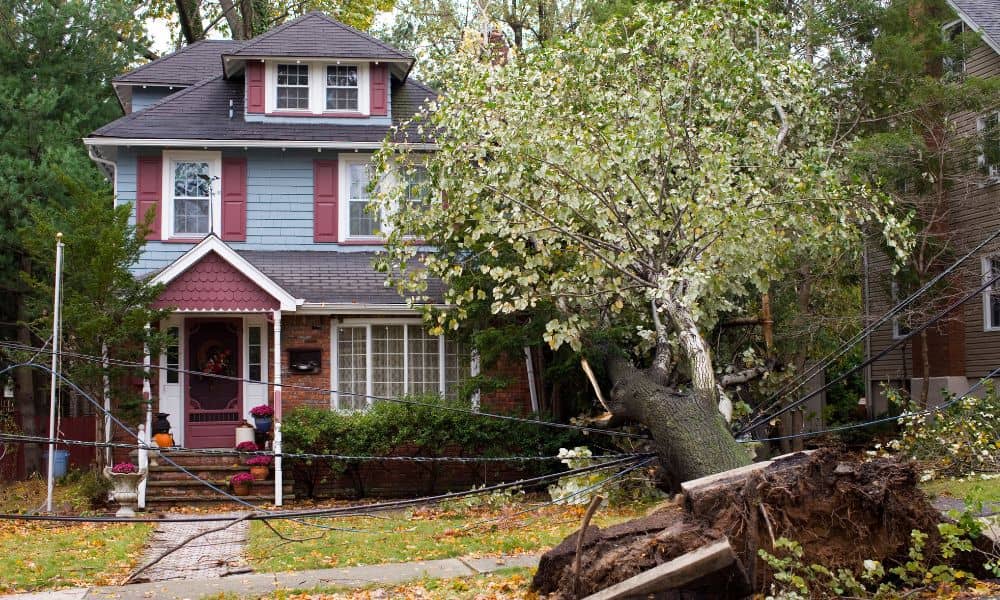
Boston’s coastal neighborhoods—East Boston, Dorchester, Quincy, and Hingham—felt the full force of the recent Nor’easter. Heavy winds uprooted trees, storm surge chewed up retaining walls, and soaked soil caused old fences to lean or collapse. These visible changes are only part of the problem.
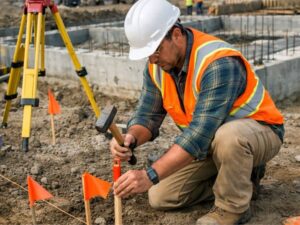
When ground conditions change, even slightly, monuments and boundary markers can shift. Those small metal pins at the corner of your yard might have moved just a few inches—but in land surveying, a few inches can decide who owns a strip of land or who must repair a shared wall. That’s why property owners should act quickly to check their boundaries before they file any insurance or loan claim.
What an ALTA Title Survey Really Does
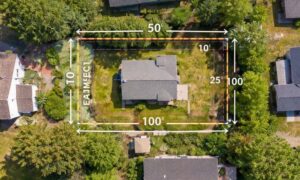
An ALTA title survey—short for American Land Title Association survey—is a gold-standard map of your property. It shows exact boundary lines, all improvements (like driveways, decks, or sheds), visible utilities, and any recorded easements that affect ownership.
Unlike a basic property sketch or a quick boundary check, an ALTA title survey meets strict national standards used by title companies, lenders, and insurance providers. It links the legal description from your deed to real-world, measurable points on the ground.
After a storm, that connection becomes critical. Insurance adjusters need clear evidence of what existed before and after the event. Title insurers want assurance that no encroachments or easements were disturbed. A current ALTA survey delivers both.
Why Timing Matters
Most property owners wait until a sale or refinance to order a survey. But after a severe storm, waiting can cause headaches. If you plan to file a claim, rebuild, or refinance, your insurer or lender may ask for updated site information. Ordering an ALTA title survey early speeds that process.
More importantly, it gives you hard proof. If a fallen fence or wall crosses into your neighbor’s lot, emotions can rise quickly. Having a licensed land surveyor mark the official boundary lets you settle the question before it turns into a conflict—or worse, a legal fight.
The 48-Hour Window After a Nor’easter
Once the rain stops and it’s safe to go outside, take a few practical steps before calling your surveyor. Walk your property and document what you see:
- Take photos or videos of corners, walls, and fences.
- Save receipts for any emergency work like tree removal or debris hauling.
- Gather your old plot plan or deed if you have one.
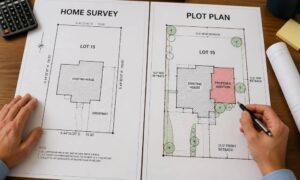
- Use the MassGIS Parcel Viewer online to get a rough look at your lot, but remember—it’s not survey-grade accuracy.
These simple records help your surveyor compare what changed. They also show your insurance company that you acted fast to document storm impacts.
What the Surveyor Checks After the Storm
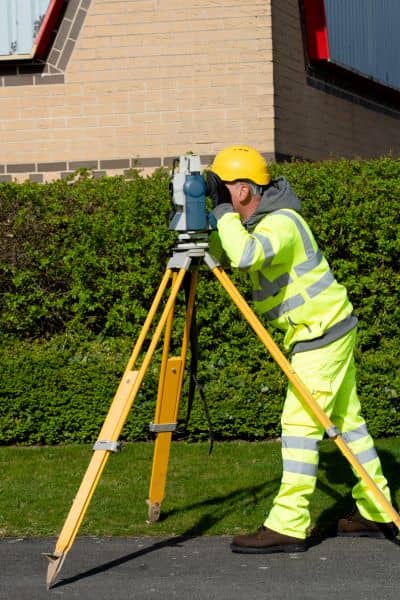
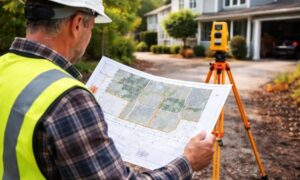
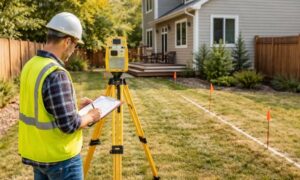
When your surveyor arrives, they’ll start by re-establishing the property’s control points—the reference coordinates used in previous surveys. Then they’ll measure fences, corners, walls, and structures to see if anything moved.
They may also note changes in elevation or grade if erosion occurred near your foundation or driveway. Once the data is collected, the surveyor prepares an updated ALTA title survey map that shows the current boundary, improvements, and any new encroachments.
This map is certified and legally defensible. It becomes part of your permanent property record and can be submitted with insurance, loan, or reconstruction documents.
Storm-Specific Details to Include
When ordering your ALTA title survey, ask your surveyor to include items that matter most for storm recovery. These optional “Table A” features make your map even more useful:
- Address and total land area for quick claim reference.
- Building footprint measurements to confirm if any structure shifted.
- Visible utilities that may have been exposed or displaced.
- Driveway or parking features if the surface cracked or lifted.
- Evidence of recent earth movement, such as washouts or slope failures.
These details tell your insurer exactly what the storm affected—and what stayed intact.
Local Triggers That Call for a New Survey
Not every property needs a fresh ALTA survey after bad weather, but several situations make it a smart move:
- Homes near the harbor or low-lying streets that flooded.
- Shared fences or retaining walls that now lean or tilt.
- Driveways or patios that shifted noticeably.
- Any property preparing for refinancing, reconstruction, or sale.
For older city lots with tight boundaries, even minor damage can blur the line between two owners. Getting the survey done early removes that uncertainty.
How to Use the Survey in Your Claim Package
Once your survey is complete, organize your documentation before submitting your claim. Combine these into one clear packet:
- Your photos and receipts.
- The certified ALTA title survey.
- A brief note describing what changed.
Send this to your insurance adjuster, lender, and contractor. Everyone works from the same accurate reference, which speeds claim reviews and prevents miscommunication later.
If a dispute arises, your surveyor’s signed plan provides solid evidence of property limits recognized under Massachusetts law.
When to Call a Land-Court-Savvy Surveyor
Sometimes the storm damage reveals deeper title problems. Maybe a boundary pin is gone, or two old deeds don’t match up. In those cases, you’ll want a surveyor experienced with Land Court standards. They know how to prepare precise documentation that holds up in property disputes or formal filings.
Final Thoughts:
Storms come and go, but your property rights shouldn’t shift with the wind. Ordering a post-storm ALTA title survey gives you clarity, proof, and peace of mind. It helps insurers process your claim faster, protects you from neighbor disputes, and ensures your rebuilding plans start on solid legal ground.
If your property took a hit from the recent Nor’easter, don’t rely on guesswork or satellite maps. Talk to a licensed land surveyor and schedule your survey today—before filing your claim. It’s the fastest way to make sure your property lines stay as firm as your foundation.