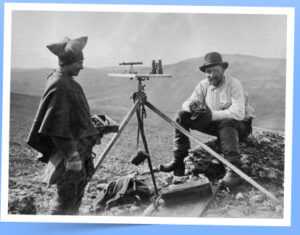
A Short History on Land Surveying

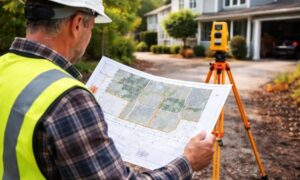
Land surveying is one of the the oldest professions anywhere. After any two individuals own property on opposite sides of a line – land surveying is important.

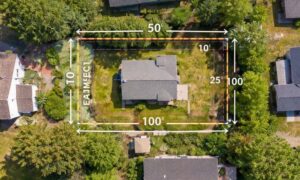
Land surveying is fascinating. The strategy used aim to determine which section of land is owned by whom, hopefully ending arguments for good.

To put it briefly, surveying is really a process using mathematical methods for surveying land to determine its ownership.

The first accounts of surveying land extends back to ancient Egypt. Experts have discovered evidences that the ancient Egyptians used basic geometry to redraw the lines of boundary when the Nile River overflowed. An Egyptian land register going back 3000 BC was found.

Following the Egyptians, the Romans – also the most powerful civilizations within the ancient world – practiced land surveying. They took it a pace further and made “land surveyor” an official position inside the Empire. These folks called agrimensores, often called Corpus Agrimensorum Romanorum. Despite the fact they used rather simple tools, these people were very thorough with their jobs and would create straight lines and proper angles with the use of these tools. As soon as the lines were measured, they’d create shallow ditches to mark the lines. Actually, much of the furrows they made continue to exist today.

One of several recorded land surveying of the “modern” times belongs to William the Conqueror who wrote the Domesday Book in 1086. This book is really a menu of names of land owners, the amount of land they owned as well as other information about the land. While it was a substantial volume of information during this period, the pieces of information weren’t 100% correct. The locations just weren’t accurate and the maps were not made to scale.

Among history’s greatest icons have also been an ardent surveyor – Napoleon Bonaparte. The interest in surveying land was really just a product of his wish to conquer the earth. Napoleon Bonaparte founded a registry referred to as cadastre. This includes a registry of properties of a county, ownership details, locations and as much information concerning the land’s value. Yes, Napoleon Bonaparte can be regarded as a land surveyor – plus a very smart man.

The strategies put to use in land surveying also have evolved over the centuries, over time. Long ago, people would use whatever could help them determine the distance from one point to another. This implies using chains with links and even ropes. Not surprisingly, this didn’t give accurate results but they did not have the technology we now have.

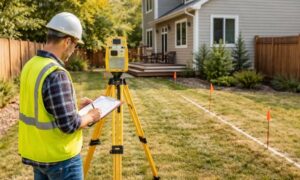
Today, land surveyors possess the best technologies to assist them with their job. There is GPS, or Global Positioning System, which is quite possibly the most accurate technologies available today. Total stations are also crucial to a land surveyor, which employs the utilization of an EDM or Electronic Distance Measurement device together with a theodolite which enables for further precise angle and distance measurements.

author avatar
Surveyor

More Posts

Winter street flooding affecting one block, showing how lidar mapping helps identify hidden low points and drainage paths
land surveying
Surveyor

LiDAR Mapping: Solving the “One Block Under Water” Problem

You’ve seen it: a winter storm rolls through, the tide runs high, and one block ends up under water while the next block stays mostly dry. Then the same question pops up: “Why here?” Around Boston, this turns into a winter headache fast. Water pools, then it freezes. After that,

Read More »
Flooded coastal street during a storm, showing rising water levels and the importance of an elevation certificate for flood risk assessment
flood damage
Surveyor

Flood Warnings Are Back — Elevation Certificate Savings

Flood warnings are back in Boston, and once again, homeowners feel uneasy. Storm alerts, king tide forecasts, and coastal flooding news spread quickly across social media and local reports. Even when streets clear fast, the worry lingers. Many people start asking the same question: Is my flood insurance about to

Read More »
Tight backyard fence and narrow side yard where a property line survey helps confirm boundaries
boundary surveying
Surveyor

The Hidden Risks of Skipping a Property Line Survey

Boston is known for its charm, history, and beautiful neighborhoods. But if you own a home here, you already know one thing: space is tight. Homes sit close together, yards are small, and property lines often feel unclear. Because of this, even small projects can turn into big problems if

Read More »
Professional lot survey in progress using modern equipment on an irregular residential property
boundary surveying
Surveyor

How to Prepare a Lot Survey for Older Deeds & Irregular Lots

Boston is one of the oldest cities in the country. Because of that, many properties sit on land that was divided, sold, and recorded long before modern standards existed. As a result, preparing for a lot survey often takes more care than people expect. Older deeds, uneven parcel shapes, and

Read More »
Drone land surveying being conducted by a professional surveyor at an active urban construction site
land surveying
Surveyor

Why Drone Land Surveying Workflows Are Changing

Drone land surveying changed how cities are measured. For years, drones helped surveyors work faster, safer, and with fewer boots on the ground. In dense cities, that mattered a lot. Tight lots, tall buildings, and busy streets made aerial data a smart solution. However, things are shifting. Not because drones

Read More »
Developers reviewing an ALTA survey during a commercial real estate deal discussion
alta survey
Surveyor

Why Developers Rethink the ALTA Survey After Deal Delays

In Boston’s fast-moving commercial market, timing matters. Over the past year, many deals have slowed down right before closing. In many cases, the issue was not financing or zoning. It was the alta survey. Developers who once treated the survey as a late-stage task now see it as a critical

Read More »