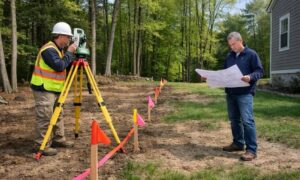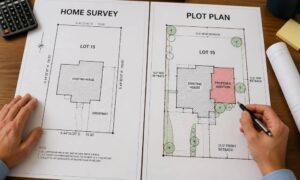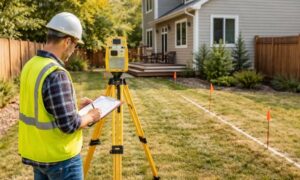
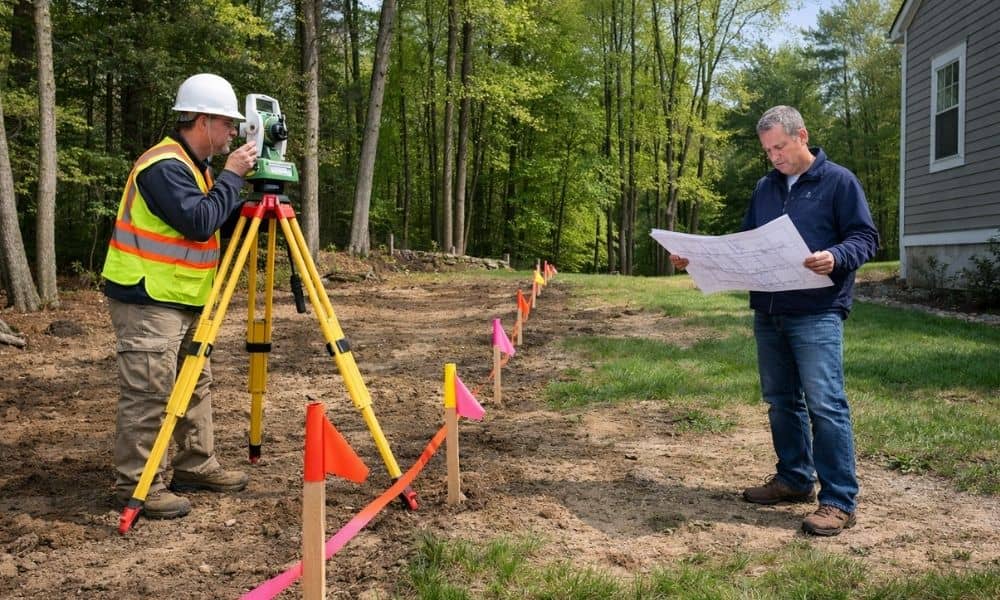
Scheduling a land survey for fence installation is one of the smartest moves a developer can make before breaking ground. It protects your investment, keeps you on the right side of Massachusetts law, and prevents costly disputes down the road. But getting the survey right means doing more than just marking property lines. You need to think through purpose, landscape, regulations, access, and future plans before the surveyor ever shows up.
Here is what you need to know.
Define the Purpose of the Fence Before Any Survey Work Begins
Before you call a licensed land surveyor, get clear on why the fence is going in.
Is it for privacy? Security? Pet containment? Pool safety? Noise reduction? Aesthetics?
The answer shapes every decision that follows. A privacy fence along a rear lot line sits differently than a pool enclosure that must meet strict Massachusetts safety codes. A fence built for dog containment needs gap-free panels and specific latch hardware. A decorative fence in a residential development may need to match neighborhood design standards.
Purpose also drives gate placement. A security fence with a single entry point works differently than a fence designed for entertaining, where multiple wide gates allow easy access between zones. Think about who needs to move through the fence, and how often.
Fence height is another consideration. Massachusetts municipalities often cap residential fence heights at four feet in front yards and six feet in rear yards, but those limits vary by town. Knowing the intended use helps you figure out whether standard heights will work or if you will need to request a variance.
Nail down the purpose before the survey begins. It saves time, money, and revisions.
Evaluate Existing Landscape Features That Could Affect Fence Design
A property is never just a flat rectangle. Mature trees, stone walls, drainage swales, retaining walls, sloped terrain, and established gardens all affect where a fence can realistically go.
Walk the site before the surveyor arrives. Document what is there.
Mature trees present a common challenge. Tree roots extend outward at roughly the same distance as the tree’s canopy. Placing a fence post inside that root zone can damage the tree and cause the post to heave over time. Map the trees and their drip lines before setting the fence line.
Stone walls are a Massachusetts staple. Many older properties have historic fieldstone walls running along or near lot lines. These walls can serve as natural fence anchors or as boundary references, but they are not always accurate boundary markers. A survey will clarify what the wall’s relationship is to the legal boundary.
Drainage swales and low-lying areas need attention too. Fencing across a drainage path can cause water to back up, leading to erosion, flooding, or soggy soil that weakens fence posts over time. A fence layout that accounts for drainage early avoids expensive fixes later.
Uneven terrain also affects fence style. Stepped fencing works for steep slopes but leaves gaps at the base. Racked fencing follows the contour of the land and closes those gaps. The terrain you document now determines which system works.
Consider Local Massachusetts Regulations Beyond Basic Property Requirements
Massachusetts does not operate on a single statewide fence code. Regulations vary by city and town, and developers need to research local rules before finalizing any fence design.
Key areas to investigate:
Municipal fence ordinances. Most Massachusetts towns have zoning bylaws that regulate fence height, materials, and placement near property lines, sidewalks, and streets. Check with your local planning or building department before designing anything.
Historic district guidelines. If the property sits within a local or state historic district, fence materials, styles, and colors may need approval from a historical commission. Wood rail fencing may be required in some districts. Chain link and vinyl may be prohibited.
Neighborhood design standards. Planned developments and homeowner associations often layer additional requirements on top of town rules. Review any applicable covenants or design guidelines before you proceed.
Pool enclosure requirements. Massachusetts General Laws Chapter 140, Section 206A and local bylaws regulate pool fencing. Pool enclosures typically must be at least four feet high, self-closing, self-latching, and free of handholds that could let a child climb over. Confirm current requirements with your municipality.
Visibility rules near streets and driveways. Many towns require a clear sight triangle at intersections and driveways. Fencing within this triangle may be prohibited or limited to a maximum height of three feet. This rule exists to prevent accidents.
Research these requirements before the survey is complete. Adjustments to fence placement or design are far cheaper on paper than after posts are set.
Plan Fence Access Points Around Daily and Seasonal Property Use
Access is one of the most overlooked parts of fence planning. A fence that cuts off critical movement paths creates daily frustration and seasonal headaches.
Think through the following before gate placement is finalized.
Equipment access. Lawn mowers, snowblowers, and landscaping equipment need to move through or around the fence. A 36-inch gate is standard for foot traffic but too narrow for a riding mower. A 48- to 60-inch gate clears most residential equipment.
Snow removal routes. Massachusetts winters are serious. Plow trucks need a clear path to push snow off driveways and parking areas. A fence that blocks the natural snow removal route forces homeowners to hand-shovel or create workarounds that damage the fence over time.
Utility access. Gas meters, electrical panels, and utility shutoffs located near the fence line need to remain accessible for service and emergency use. Massachusetts utility companies require unobstructed access to meters and equipment. Placing a locked gate in front of a utility access point creates compliance problems.
Backyard entertaining. If the property includes or will include a patio, deck, or outdoor kitchen, consider how guests will move between indoor and outdoor spaces. Double gates or wider openings improve flow during gatherings.
Landscaping maintenance. Flower beds, vegetable gardens, and irrigation systems inside the fence line need regular access. Design gate placement around maintenance patterns, not just aesthetics.
Good access planning today prevents retrofitting gates and fence sections later.
Coordinate Fence Design With Future Property Improvements
Developers often think about the fence as a standalone project. It is not. The fence you install today will interact with every future improvement on that property.
Before finalizing the survey and design, ask what is coming next.
Patios and decks. A fence installed tight to the house may conflict with a future deck expansion. Leave enough clearance so that outdoor living areas can grow without requiring fence removal or relocation.
Sheds and outbuildings. Massachusetts requires building permits for most sheds over 200 square feet. Some towns require permits for smaller structures. Plan for where outbuildings will go, and confirm that the fence does not block future placement options.
Pools. Installing a pool after a fence is already in place often requires fence modifications or removal to bring equipment in. If a pool is even a possibility in the next five to ten years, design the fence layout to accommodate that access now.
Outdoor kitchens and fire pits. These features often need gas line access, electrical conduit, or drainage connections. Fence placement that runs over future utility paths creates dig-up-and-repair scenarios that could have been avoided.
Garden expansions and drainage upgrades. Properties evolve. Garden beds grow. French drains get added. If a fence locks in the landscape footprint too tightly, there is no room to adapt.
Discuss planned improvements with your surveyor and design team before the fence layout is finalized. A small adjustment in the survey phase can save significant time and cost later.