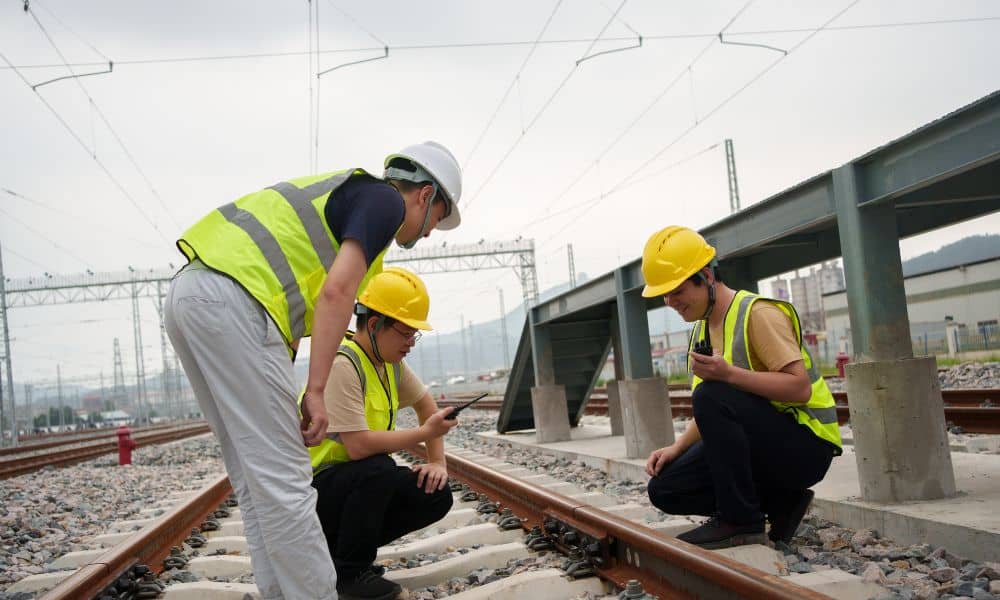
When a train derails, most people think about mechanical failure or operator error. However, very few people think about ground measurement. Yet every rail line, road, and building depends on one quiet layer of protection: accurate positioning and elevation control. That is exactly where land surveying plays its role.
Recent transit trouble in Boston reminded engineers and builders of something important. Infrastructure does not suddenly fail out of nowhere. Instead, small errors grow over time. Tiny shifts in alignment, slope, or elevation slowly add up. Eventually, the system reaches a breaking point. While investigators study many factors, one lesson stands out for property owners and developers alike — precision in measurement matters more than most people realize.
Infrastructure Problems Often Start With Tiny Ground Shifts
Rail systems look fixed and rigid. In reality, the ground below them keeps moving. Soil settles. Water flows. Freeze-thaw cycles expand and contract materials. Heavy loads compress layers. Because of that, alignment never stays perfectly still.
At first, the change looks too small to worry about. However, distance multiplies error. A slight deviation across a long corridor creates real risk.
Now here’s the part many clients miss — this same pattern shows up on private construction sites. A parking lot drains poorly. A slab tilts slightly. A curb line runs off alignment. A utility trench sits too shallow. Each problem often traces back to small measurement drift that nobody caught early enough.
That is why land surveying does more than mark boundaries. It protects geometry across real projects.
Land Surveying Connects Design to Reality
Design drawings look perfect on paper. Lines stay straight. Elevations match exactly. Angles stay clean. Yet the field never behaves that neatly. Crews adjust work in real time. Conditions change. Materials vary. Therefore, the built result can drift away from the design unless someone verifies it.
That “someone” is usually the survey team.
Modern land surveying ties the design to the ground through control points and reference benchmarks. Those points guide layout, grading, and placement. More importantly, surveyors return to measure what crews actually built. That step keeps the project honest.
Without verification, teams rely on assumption. With verification, teams rely on proof.
Clients benefit directly from that difference. Verified layout reduces rework, avoids inspection trouble, and keeps construction aligned with intent.
Why Alignment and Elevation Matter More Than People Think
Alignment sounds technical, but the idea stays simple. Things must sit where they belong. Elevation also sounds technical, yet it simply means height and slope. Both factors control performance.
When alignment shifts, parts stop fitting together correctly. When elevation runs wrong, water flows the wrong way. As a result, problems appear later — often after money gets spent.
For example, a commercial pad built slightly off elevation can create drainage headaches for years. A roadway crown placed incorrectly can cause water to pool and weaken pavement. A warehouse floor poured outside tolerance can affect equipment operation.
In each case, the project still looks finished. However, performance suffers.
Strong land surveying catches these issues early because surveyors measure position and height throughout construction — not just at the beginning.
Modern Tools Make Land Surveying More Powerful Than Ever
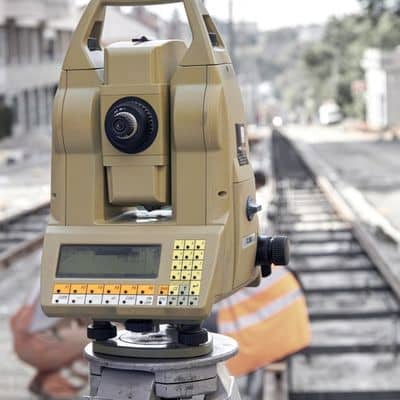
Survey work today looks very different from the old tripod-and-tape image many people still imagine. Technology now gives surveyors faster and richer site data. Even so, skill still matters most. Tools support judgment — they don’t replace it.
Today’s survey teams often use drone mapping, laser scanning, and high-precision GPS systems. These tools capture dense surface detail instead of just scattered points. Because of that, teams see patterns and deviations sooner.
For instance, a surface scan can reveal subtle slope errors across an entire corridor. A drone map can show grading progress across a large site within hours. Digital terrain models can highlight drainage risk before paving begins.
Clients gain value from early visibility. When teams see issues sooner, fixes cost less.
The Same Lessons Apply to Private Development
Some readers might think rail incidents only matter to transit agencies. However, the measurement lesson applies to everyday development too. Any project that depends on position and elevation carries similar risk.
Commercial sites, subdivision roads, industrial yards, and utility corridors all depend on correct layout. Even residential builds rely on proper grading and placement.
Measurement drift leads to change orders, delays, and disputes. On the other hand, verified survey control creates confidence. Builders know where things belong. Inspectors see proof. Owners get documentation.
Therefore, land surveying supports not just design — but accountability.
Clients Rarely See Measurement — But They Feel the Results
Here’s the interesting part. Good measurement rarely gets attention. When layout stays correct and slopes drain properly, nobody celebrates survey control. Everything just works.
However, when measurement fails, everyone notices.
Suddenly, repairs cost more. Timelines stretch. Arguments begin. At that point, teams wish they had invested more in verification earlier.
That is why experienced developers treat land surveying as risk protection, not a paperwork step. They understand that accuracy protects budget and schedule.
The Bigger Takeaway From the Boston Incident
Public infrastructure failures always trigger technical investigations. Many factors come into play — mechanical, operational, environmental. Yet one consistent theme appears across projects of every type: precision matters.
Measurement errors stay invisible for a long time. Then one day, they don’t.
That reality explains why modern land surveying plays such a critical role in both infrastructure and private construction. It connects design to ground truth. It verifies what crews build. It detects drift before failure.
In simple terms, it keeps geometry honest.
For property owners and developers, that lesson carries real value. You don’t need a rail line to face alignment risk. You only need a project built on land — which means every project qualifies.
And that makes land surveying one of the smartest safeguards you can include from day one.