
Every week, a strange dispute hits the internet. But one recent Massachusetts story caught everyone’s attention. A homeowner discovered that his neighbor had hired workers to remove large boulders on the edge of his yard. The neighbor claimed the town said it was fine. The police called it a civil matter. And the homeowner was left trying to prove where the boundary actually was. That moment pushed him to order a property line survey, and it made thousands of people wonder: Could something like this happen in Boston, too?
It absolutely could. And in many neighborhoods, it already has.
When a Simple Line Turns Into a Big Problem
The viral story wasn’t just about rocks. It was about confusion and assumptions—something almost every homeowner has dealt with. Many people believe fences, stone walls, or patches of grass show where their property ends. But those are only guesses. They shift, age, crumble, or get rebuilt in the wrong place.
Boston’s dense layout makes boundaries even trickier. Triple-deckers in Dorchester sit only a few feet apart. Backyards in East Boston slope into shared alleys. Many homes have old retaining walls that look like lot lines but were never meant to serve as legal boundaries.
So when a neighbor changes something near the line, it becomes a big deal, fast. The viral feud proved how quickly a small decision—like moving boulders—can change how water flows, how land looks, and how safe a yard feels. Without clear records, minor issues turn into lasting disputes.
Why These Fights Blow Up Online
One reason is simple: everyone thinks they’re right.
One homeowner points to a fence and says, “This marks the line.” Their neighbor pulls up a town map or an online parcel viewer. A contractor claims they measured things correctly. Someone else trusts what the previous owner said years ago.
But none of these things decide the legal boundary. The only thing that does is paperwork and precise measurement.
A property line is set by deeds, historic plans, and on-site measurements. Only a licensed surveyor combines all that. When neighbors disagree and no one has real evidence, arguments spread, tension rises, and soon the story reaches the internet. That’s exactly what happened with the boulders. It wasn’t the rocks that shocked people—it was how fast a simple misunderstanding became a legal mess.
Why Homeowners Are at Higher Risk
Boston’s layout creates the perfect setup for boundary confusion.
Properties sit extremely close together. Even a few inches matter when homes are only six or seven feet apart. Old fences and walls don’t reflect legal lines. Yard features shift over time. And because many lots are over a century old, the original markers may be gone.
Boston also has tricky drainage patterns. Sloped yards, shared swales, and narrow side passages can change how water flows. If one homeowner alters these areas, the impact hits the neighbor right away. This is exactly what happened in the viral dispute. By removing boulders that supported a drainage ditch, the neighbor may have changed how runoff moved across the property.
Add constant renovations—new decks, patios, parking pads, retaining walls—and it’s easy to see why boundary mistakes happen so often here.
How a Property Line Survey Brings Clarity
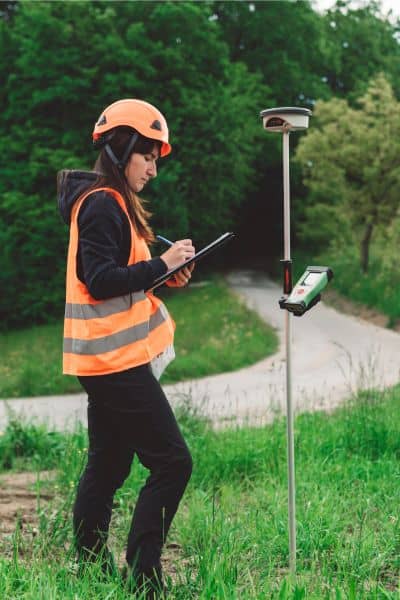
When confusion rises, a property line survey clears things up. It replaces guesses with facts. It settles arguments and prevents bigger problems. Instead of debating what someone “thinks” the line is, a survey shows the exact edges of your land.
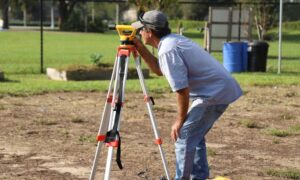
A surveyor studies recorded deeds and plans, checks the history, and measures the land with professional tools. They locate or reset markers and give you a stamped document you can rely on. This becomes the strongest evidence in any disagreement.
For homeowners, this clarity matters more than ever. With tight lots and constant construction, knowing your true line protects you from building mistakes and neighbor conflicts.
Before Your Neighbor Touches the Boundary
Most people don’t think about their lot lines until trouble starts. But in Boston, it’s smarter to get ahead of it.
Talk to your neighbors before building fences, patios, or walls. Share your documents. Ask them to do the same. If the edge between your properties looks unclear, consider getting a survey before work begins. This keeps projects smooth, friendly, and legal.
If you already plan to sell, renovate, or add outdoor features, a survey brings peace of mind. It stops surprises during inspections or closing.
If Your Neighbor Already Moved or Removed Something
This is the moment when the viral story becomes useful.
If a neighbor removed stones, shifted soil, dug a trench, or built too close to your side, pause and document everything. Take photos and notes, but stay calm. Do not argue back and forth. Instead, bring in a licensed surveyor.
A survey gives you the facts you need to move forward. It helps you talk to your neighbor with confidence. It also protects you if the issue grows beyond a simple disagreement.
If the change affects drainage, runoff, or soil stability, the local Conservation Commission may need to review it. If a structure was shifted—like a wall, deck, or driveway—you may need to speak with the city’s Inspectional Services Department. Most of the time, issues settle once both sides see the actual boundary on paper.
Everyday Situations Where Surveys Save the Day
These examples happen more often than you’d think:
A South Boston deck extends a foot too far. A Somerville parking pad creeps over the lot line by a few inches. A Roslindale retaining wall gets rebuilt on the wrong side. A Dorchester fence installer uses a “best guess” instead of real measurements. A neighbor in Quincy digs a trench that sends water straight into your yard.
All of these lead to one simple question: Where is the real line?
A survey answers it clearly.
The Real Lesson Behind the Viral Feud
The Massachusetts boulder story didn’t go viral because of rocks. It went viral because it showed how quickly a boundary issue can spiral out of control. It revealed how much people rely on assumptions and how fast those assumptions fall apart.
It also reminded homeowners that police often can’t help and that towns don’t decide boundaries on the spot. Only a licensed surveyor can bring certainty.
So if you live in Boston, Cambridge, Newton, Somerville, or any nearby town, take this as a sign: if anything changes near the edge of your property, make sure you know exactly where the line stands.
Property line surveys protect your land, your investment, and your peace of mind—long before a simple mistake turns into the next viral neighborhood feud.