
Homeowners are feeling uneasy—and for good reason. With talk of a major residential property tax increase spreading fast online, many people have started to look closely at their own assessments. Social media threads and Reddit discussions are full of screenshots, comparisons, and frustration. In the middle of all this noise, one document keeps coming up as a quiet but powerful reality check: the boundary survey. It doesn’t lower your taxes by itself, but it helps answer a question many homeowners are now asking—is the city’s data about my property actually correct?
This shift didn’t happen by accident. When tax changes stay abstract, people debate policy. However, once dollar amounts hit personal tax bills, the focus turns inward. Suddenly, homeowners want facts, not opinions.
When a Policy Debate Turns Personal
Boston’s proposed property tax changes moved quickly from government discussions to online conversations. As the issue gained traction on social media, homeowners began sharing their own numbers publicly. Some saw sharp increases. Others noticed big differences between similar homes on the same street.
As a result, the conversation changed. Instead of asking why taxes were rising, many started asking how their property value was calculated in the first place. That’s an important shift. Property taxes rely on records—sometimes very old records—not on fresh measurements taken on the ground.
Because Boston is dense and historic, those records don’t always reflect current reality.
Why Property Tax Assessments Aren’t Based on New Measurements
Most homeowners assume assessments rely on precise, updated data. In reality, assessments depend on a mix of recorded information, past maps, and valuation models. While this system works at scale, it can also carry forward small assumptions for decades.
In newer suburbs, those assumptions may stay close to reality. In Boston, they often don’t.
Many parcels were created long before modern mapping tools existed. Over time, lot lines were described, redrawn, or digitized based on old references. As properties changed hands, those descriptions stayed in the system. Meanwhile, the city grew tighter, buildings expanded, and shared boundaries became more complex.
So when taxes rise, those old assumptions suddenly matter more.
The Question Homeowners Are Asking Right Now
Across online discussions, a clear theme keeps showing up: “Is my lot size right?”
People aren’t arguing with neighbors or planning construction. Instead, they are comparing records to lived experience. Some notice their assessed lot size feels larger than the space they actually use. Others see boundary lines on city maps that don’t match what they’ve always believed.
At this stage, confusion—not conflict—is the real problem. Homeowners want clarity before reacting, appealing, or stressing over numbers that may not tell the full story.
Where a Boundary Survey Fits Into the Conversation
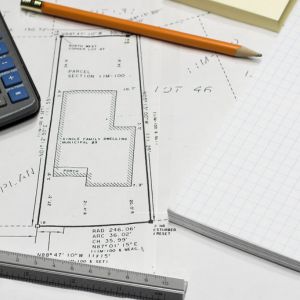
This is where a boundary survey becomes relevant in a new way. Not as a dispute tool. Not as a permit requirement. Instead, it works as a verification step.
A boundary survey establishes the legal limits of a property based on recorded documents and precise field measurements. When compared against assessment records, it helps homeowners understand whether the city’s data lines up with what exists on the ground.
It’s important to be clear here. A boundary survey does not automatically change a tax bill. However, it gives homeowners something just as valuable—confidence. Before questioning an assessment or assuming an error, it helps confirm whether there is actually a mismatch.
Why This Matters More in Boston Than Most Cities
Boston’s layout magnifies small differences. Lots are compact. Boundaries are shared. Shapes are rarely perfect rectangles. Because of this, even minor discrepancies can affect how a property is recorded and valued.
In addition, many homes sit on parcels created generations ago. While ownership has changed, the underlying descriptions often haven’t. Over time, those descriptions were translated into digital maps. During that process, subtle details sometimes got simplified.
When taxes increase, those simplifications suddenly feel very real.
Situations Where a Boundary Survey Can Bring Clarity
Not every homeowner needs to rush out and order a survey. Still, certain situations make it a smart step before reacting to an assessment.
For example, irregularly shaped lots often rely on estimated square footage in public records. Likewise, properties with shared or closely aligned boundaries may carry assumptions that no one has questioned for years. Older parcels, especially those never re-surveyed after subdivision or redevelopment nearby, can also raise questions.
In these cases, a boundary survey provides a factual comparison point. It replaces uncertainty with measured information.
What to Review Before You Take the Next Step
Before doing anything else, homeowners can start by reviewing a few basic documents. The city’s assessor card shows what data the assessment relies on. The deed outlines how the property is legally described. If an older survey exists, it can offer helpful context.
Looking at these together often reveals whether the concern is about valuation—or about underlying property data.
Why Boundary Surveys Are Suddenly Part of the Online Conversation
Rising taxes create urgency. Social media adds speed. Together, they turn quiet questions into public discussions. As homeowners search for ways to verify information instead of guessing, boundary surveys have entered the conversation naturally.
They represent something steady in a fast-moving debate. While opinions vary online, measured data stays the same. That’s why more homeowners are talking about surveys now than they did before the tax discussion gained momentum.
A Calm Way Forward
Property tax changes can feel overwhelming, especially when numbers rise quickly. Still, reacting without full information often adds stress. Taking time to understand how your property is recorded helps ground the conversation.
For homeowners who feel uncertain about what the city believes they own, a boundary survey offers clarity. It doesn’t escalate conflict or assume anyone is wrong. Instead, it provides facts—quietly and professionally. In moments like this, working with trusted boundary survey services gives homeowners a clear picture of their legal property lines before they decide what to do next.
If you’re in Boston and questioning whether your property tax assessment reflects what you actually own, a boundary survey can help you understand the numbers before you challenge them.
In a moment filled with noise, that clarity matters more than ever.